How to Remove False Nails Safely at Home
The right removal method depends on how your false nails were attached. Press-ons held by adhesive tabs lift with warm soapy water, glued nails respond to oil or acetone, and salon-applied acrylics or gel extensions need acetone soaks after filing. Rushing any of these steps is the fastest route to damaged natural nails.
Picture made with AI for this piece.
What type of false nail do you have?
False nails cover three broad categories: press-ons secured with adhesive tabs, press-ons or shorter enhancements bonded with nail glue, and salon-applied products such as sculpted acrylics or Gel-X extensions built directly onto the nail plate. Each category calls for a different removal approach, so identifying yours before you begin saves time and protects the nail underneath.
Adhesive-tab press-ons are the most forgiving — warm water is usually enough. Nail-glued press-ons sit somewhere in the middle, responding to oil-based soaks or diluted acetone. Salon acrylics and hard gel extensions are the most tenacious; they typically require filing the shiny top layer first, then a sustained acetone soak. Hard gels containing MMA, and certain other professional formulations, may not release in acetone at all and call for professional electric filing instead.
What you need before you start
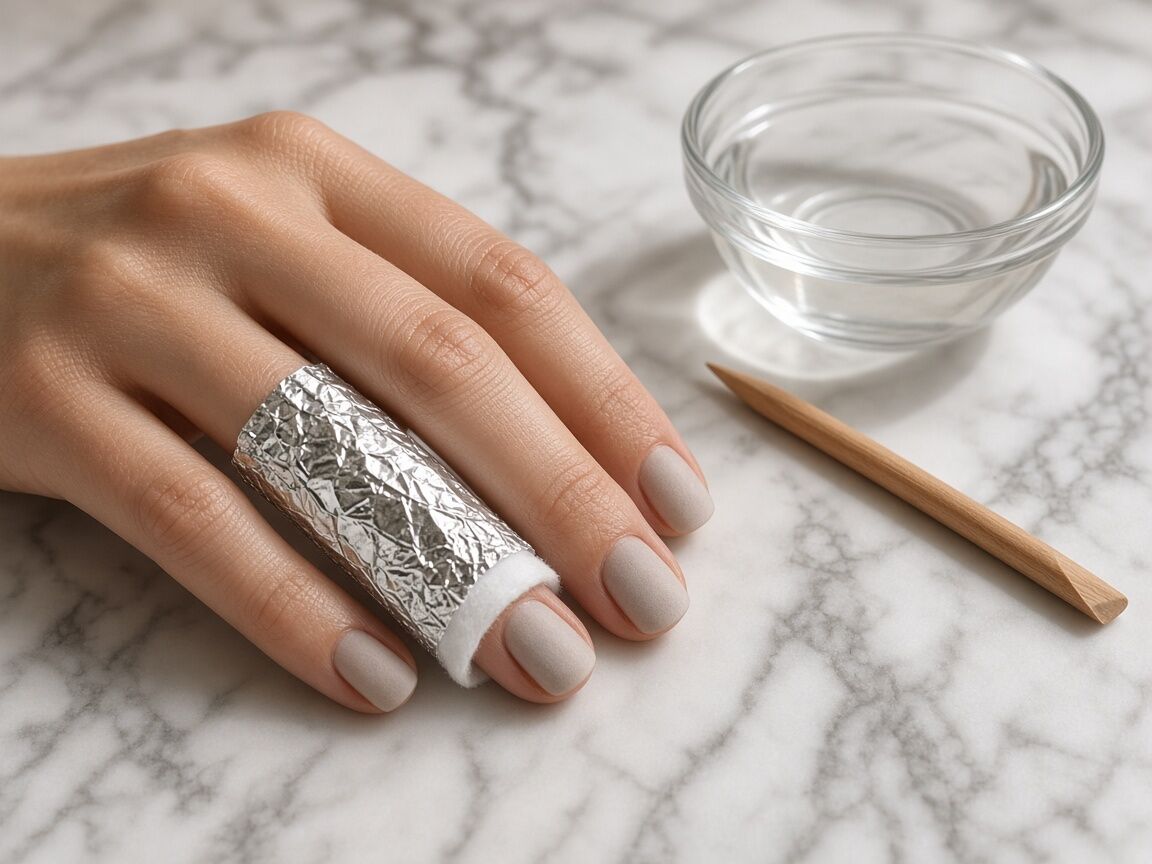
Gather everything before touching your nails so the process stays controlled. For adhesive-tab press-ons you need a bowl of warm soapy water and a wooden or plastic cuticle stick. For glued nails, add a small dish of cuticle oil or a dedicated glue remover. For acrylic or gel extensions, collect pure acetone, cotton balls, aluminium foil cut into squares, a coarse nail file, petroleum jelly or a barrier oil, and again a wooden cuticle stick.
Metal tools are off the list entirely — they scratch and gouge the natural nail plate. Work at a table near an open window or a fan, because acetone fumes are strong and ventilation is a genuine safety requirement, not a suggestion. Protect the skin around each nail with a thin layer of petroleum jelly or cuticle oil before any acetone touches it, keeping the solvent where it needs to be.
The removal steps, in order
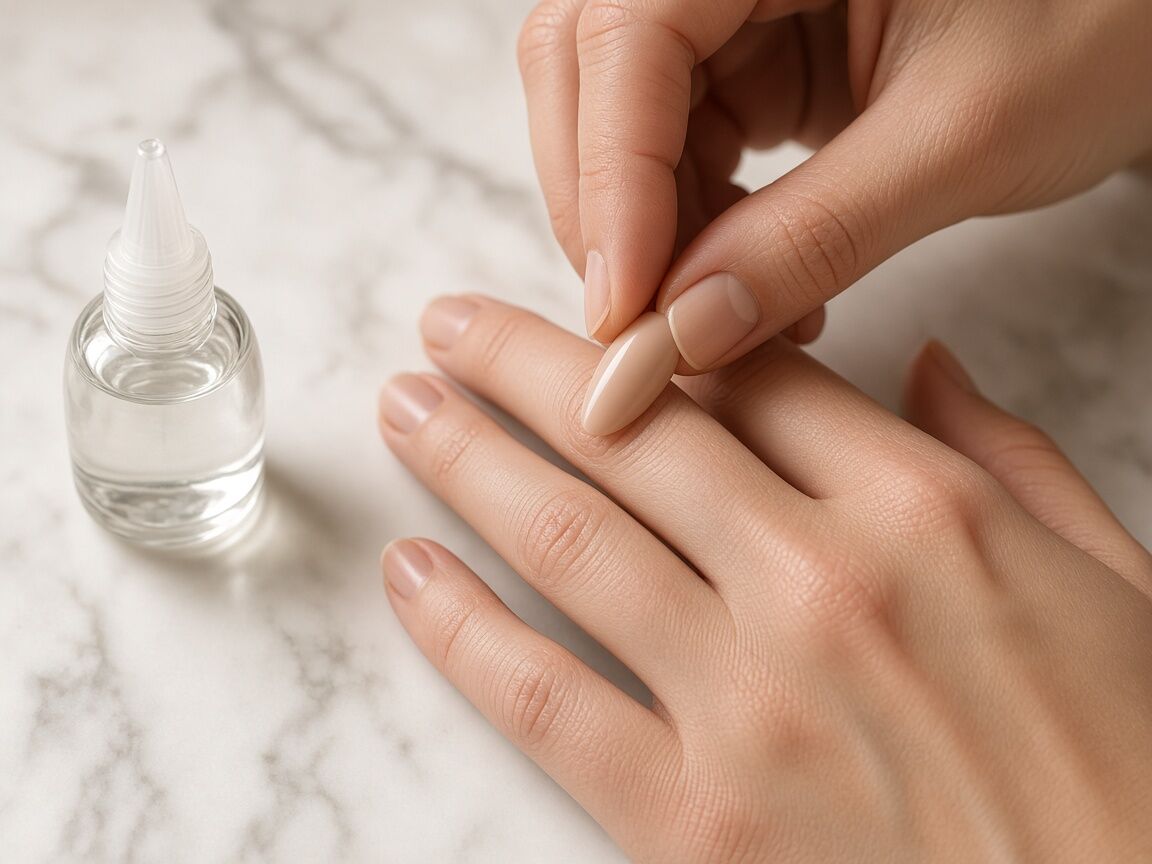
Start by trimming any excess length with nail clippers so there is less material to work through. For adhesive-tab press-ons, soak fingertips in warm soapy water for ten to fifteen minutes, then gently wiggle each nail from side to side until the tab releases. Never lever from the free edge with force.
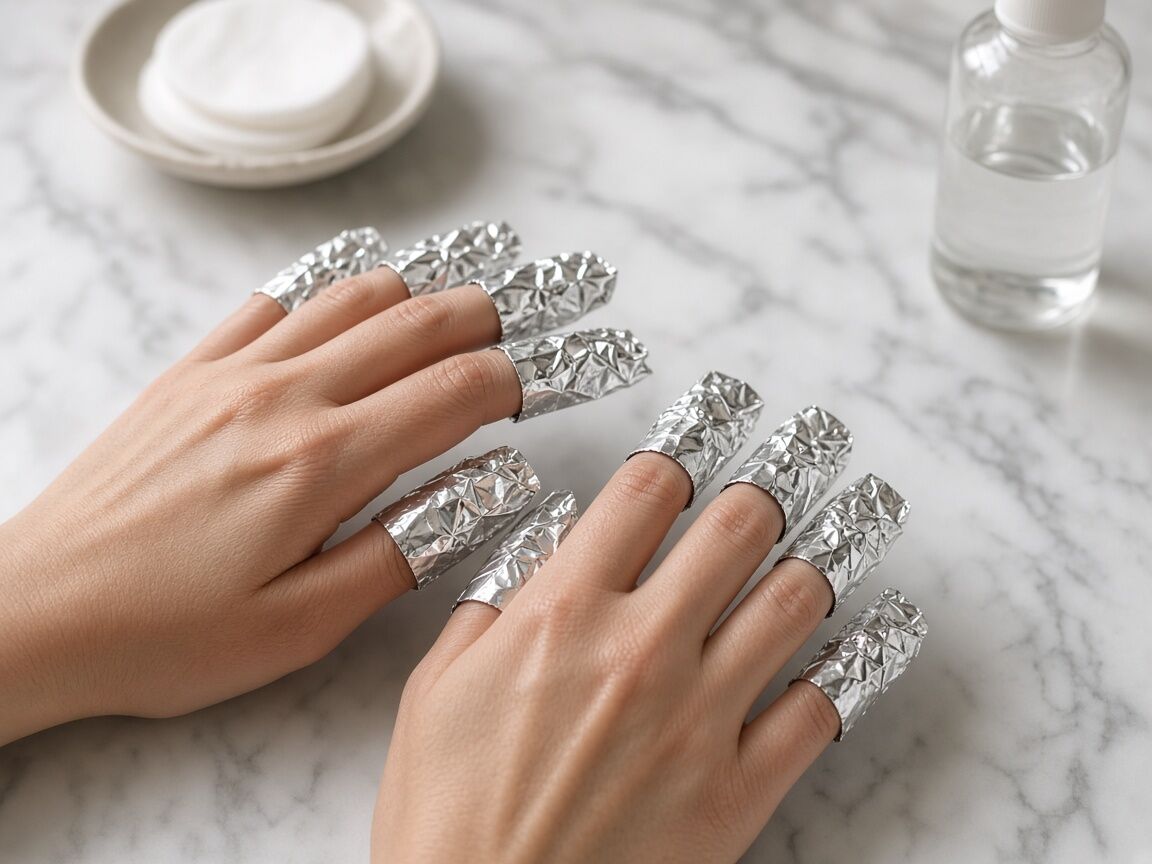
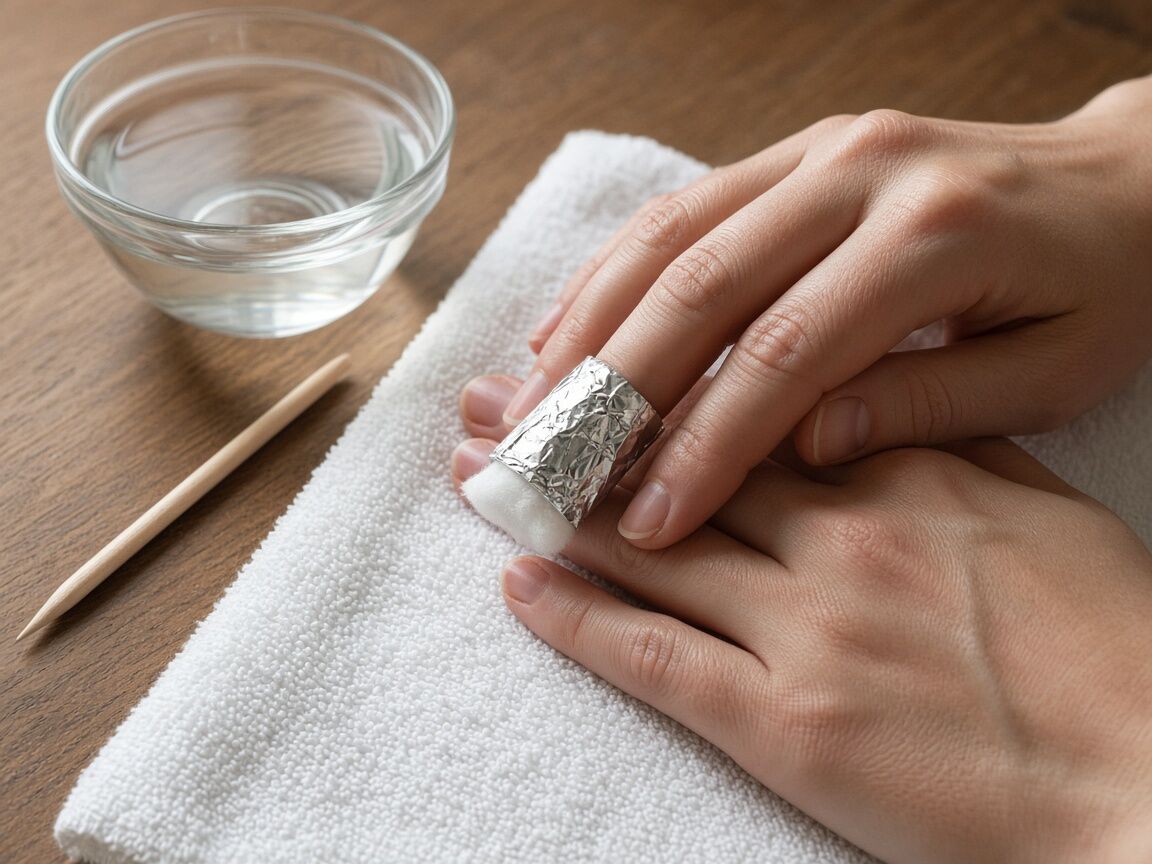
For glued nails, massage cuticle oil around the edges first and allow several minutes for it to work under the bond. If the nail still holds, soak a cotton ball in pure acetone, press it against the nail, wrap snugly with a foil square, and wait ten to fifteen minutes. Once the product has softened, use a wooden cuticle stick to push it away from the cuticle toward the free edge with light, even pressure.
For salon acrylics or gel extensions, lightly file the top surface with a coarse file to break the seal — this step allows acetone to penetrate the product rather than sit on top of it. Apply the acetone-soaked cotton and foil wrap as above, checking at the ten-minute mark. Thick or stubborn product may need a second soak. When the material lifts in soft flakes, ease it away with the cuticle stick. If it resists, re-wrap rather than forcing it.
Mistakes that damage natural nails
Pulling, prying, biting, or forcing a false nail off strips layers directly from the natural nail plate and can cause thinning, breakage, or onycholysis — the separation of the nail from its bed. This is the single most common and most avoidable mistake.
Using a diluted remover is another frequent problem: anything less than full-strength acetone slows the process and encourages impatience, which leads back to forcing. Over-filing is equally damaging — the goal is to break the surface seal, not to file through to the natural nail. Soaking for far longer than needed dries both skin and nails without speeding removal. Dental floss can be threaded gently under a lifted edge and sawed through lighter adhesive on some press-ons, but only after the edge has already released on its own — never as a prying tool from the start.
How to care for nails immediately after removal
Acetone and prolonged water soaks both draw moisture from the nail plate and surrounding skin, so hydration is the first task once every nail is clear. Apply cuticle oil or a rich cuticle cream to each nail and the surrounding skin straight away, massaging it in gently.
Give nails at least a full day before applying any new enhancement. The natural nail grows roughly three and a half millimetres per month, so if removal has caused thinning or surface damage, visible recovery takes time and cannot be rushed. Avoid picking at any remaining residue — a brief second soak is always safer than scraping. In the days that follow, continue applying nourishing oil morning and evening and avoid prolonged water exposure where possible.
How to make your next set last and come off cleanly
Preparation before application directly affects how cleanly a set removes. A lightly buffed, clean, oil-free nail surface gives adhesive tabs and glue a consistent bond that releases more evenly later. Applying too much glue, or layering it unevenly, creates thick patches that need longer acetone exposure to shift.
Product choice also matters at removal time. Several new water-and-oil-based gel systems launched in 2025 are designed specifically for easier consumer removal without acetone soaks. Dedicated glue removers formulated as gels for UV gel products also became available for retail in 2025. For anyone with known sensitivities to acrylates, dermatologic guidance emphasises patch testing before any nail service and proper ventilation throughout — guidance that applies at home as much as in a salon.
When a salon is the safer choice
Some situations are genuinely beyond safe DIY removal. Salon-applied hard gel or any product that does not soften after two full acetone soaks should go to a professional, who has the electric filing equipment to remove it without thinning the nail. If a nail is lifting from the nail bed, showing discolouration, or causing pain at any point during removal, stop and book an appointment rather than continuing.
Products containing MMA — California listed nail products with MMA above one thousand parts per million as priority products under safer consumer product regulations in 2025 — are particularly resistant to acetone and are handled more safely by a professional. The UK also moved in 2026 to prohibit new TPO-containing UV and LED gel products, with a sell-through period running until February 2027, reflecting wider regulatory attention to the chemistry of nail products. When in doubt about what is on your nails, a nail technician can identify the product and remove it without guesswork.
Questions people ask
Can I remove false nails without acetone?
Yes, for adhesive-tab press-ons. A ten-to-fifteen-minute warm soapy water soak softens the tab enough for gentle wiggling. Cuticle oil or a specialist glue remover can also work on lighter nail-glue bonds. Salon acrylics and hard gels generally need acetone or professional filing.
How long should I soak nails in acetone?
Ten to fifteen minutes is the standard starting point for an acetone-soaked cotton-and-foil wrap. Thicker salon products may need a second soak of similar length. Soaking far beyond what is needed dries skin and nails without speeding the process.
Why is pulling off false nails so damaging?
Forcing a nail off tears layers from the natural nail plate, causing thinning, surface ridging, breakage, or onycholysis — separation of the nail from its bed. Recovery depends on natural nail growth, which proceeds at roughly three and a half millimetres per month.
What tools should I use to push off softened product?
A wooden or plastic cuticle stick, used with light pressure from the cuticle toward the free edge. Metal tools scratch and gouge the natural nail surface and should be avoided entirely during removal.
What should I do right after removing false nails?
Apply cuticle oil or cream immediately to rehydrate the nail plate and surrounding skin. Avoid reapplying enhancements for at least a full day, and continue daily oil application while the nail recovers.
When should I go to a salon instead of removing false nails at home?
If the product does not soften after two full acetone soaks, if any nail is lifting from the bed or discoloured, or if you suspect the product contains MMA or hard gel, professional removal with electric filing equipment is the safer option.
The Papalocal app finds nail salons near you — available on the App Store and Google Play.
Read: How to Remove Acrylic Nails Without Damaging Your Natural Nails
Read: Press-On Nails With Glue: Apply, Wear, and Remove Safely
Read: How to Remove Gel Nail Polish Without Damaging Your Nails