How to Remove Gel Nail Polish Without Damaging Your Nails
Gel nail polish bonds to the nail plate through UV or LED curing and needs acetone — not regular remover — to dissolve cleanly. The American Academy of Dermatology outlines a foil-soak method that lifts the product without stripping natural nail layers. Done correctly, removal leaves nails intact and ready for their next look.
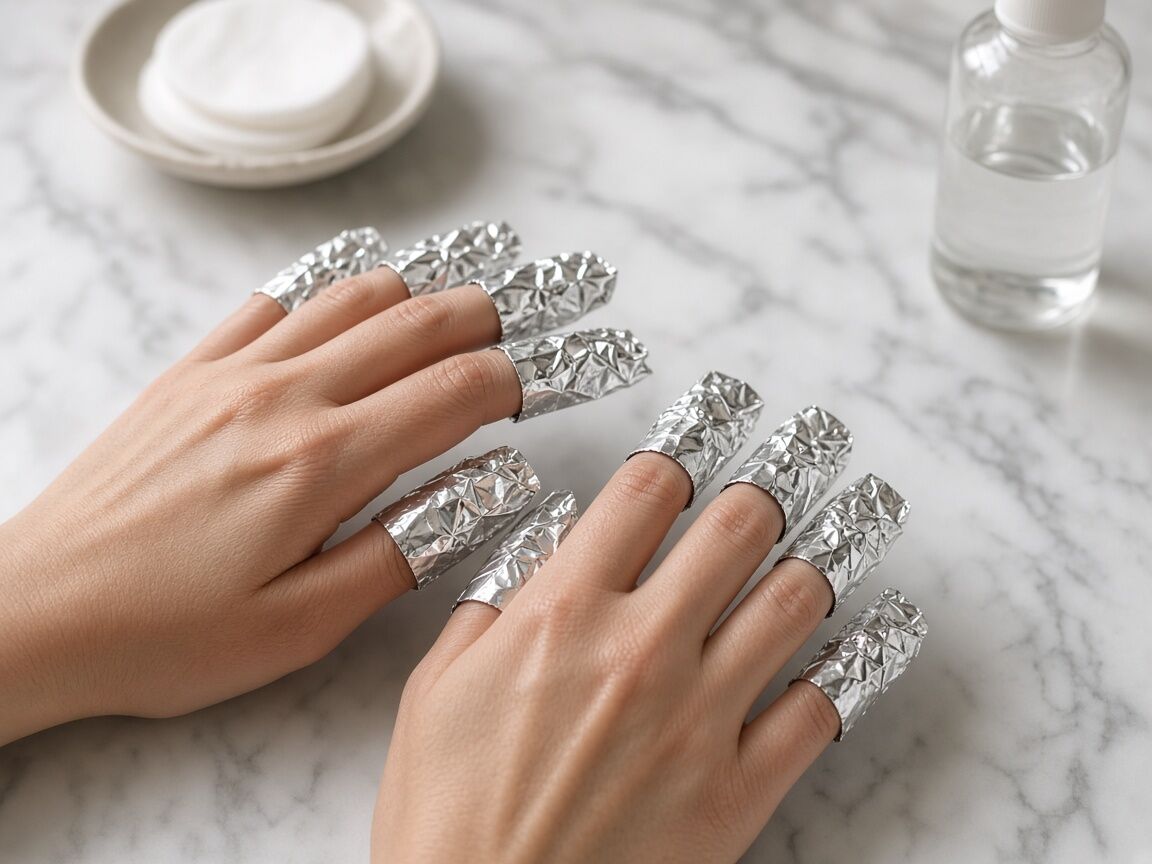
Picture made with AI for this piece.
Why gel polish needs a different removal method
Regular nail polish sits on the surface and dissolves with a simple swipe of remover. Gel polish works differently: photo-initiators in the formula harden under UV or LED light, forming a polymer network that bonds tightly to the nail plate, as Nails Magazine explains. Because that bond is structural rather than surface-level, air-dry removers have no effect, and even non-acetone formulas struggle to break it down, according to Beyond Polish.
Only pure acetone carries enough solvent strength to penetrate cured gel and release it from the nail. That chemical reality shapes every step of the process — the filing, the wrapping, the waiting. Skipping or shortcutting any part of the sequence forces the product off mechanically, which is where nail damage begins.
What you need before you start
Gather everything before touching the first nail so nothing is left half-wrapped while you search a drawer. You will need a medium-grit nail file (around 180 grit works for most gel polish), pure acetone, cotton balls or pads, aluminium foil cut into ten finger-sized strips or purpose-made removal clips, petroleum jelly, an orangewood stick or a soft cuticle pusher, and cuticle oil.
The petroleum jelly is not optional — it shields the skin around each nail from prolonged acetone contact, which the American Academy of Dermatology specifically recommends. Have a nail buffer and a rich hand cream ready for after, because rehydration starts the moment the last wrap comes off. Check that your acetone is undiluted and full-strength; diluted formulas and those marketed as 'non-drying' often fall short of the concentration needed to dissolve cured gel bonds, as The Beauty Box notes.
The removal steps, in the right order
Begin by lightly filing the shiny top-coat layer from every nail. This breaks the seal that otherwise blocks acetone from reaching the gel beneath; the American Academy of Dermatology flags skipping this step as one of the main reasons soaks fail. Use gentle, flat strokes and stop the moment the shine is gone — you are scuffing the surface, not thinning the nail.
Apply petroleum jelly to the skin surrounding each nail, then saturate a cotton pad with pure acetone and press it flat against the nail. Wrap each finger snugly in foil or secure a removal clip over the cotton. The AAD also notes that plastic food wrap creates a tighter seal than foil and reduces dripping. Leave the wraps on for ten to fifteen minutes for standard gel polish — Needle Style notes that thicker enhancements such as Gel-X need fifteen to twenty minutes, and acrylics up to thirty.
When you unwrap, the gel should look crumbly or have lifted at the edges. Use the flat end of an orangewood stick to push it gently toward the free edge. If any section resists, rewrap that finger for a few more minutes rather than applying force — Kirsty Meakin is clear that forcing product off is where the real harm happens. Finish by buffing away any thin residue, then wash hands and move straight to aftercare.
The mistakes that cause the most nail damage
Picking or peeling is the single most damaging habit in gel removal. Kirsty Meakin explains that when gel is peeled away it takes layers of the natural nail plate with it, leaving nails thin, rough, white-spotted, and sensitive — a condition that can take months to fully recover from. The same applies to using an electric file at home: Insider Beauty warns that without professional training, e-files remove nail plate far faster than a hand file and the damage is difficult to reverse.
Soaking the whole hand in a bowl of acetone is another common shortcut that backfires. Naespa Beauty points out that bowl soaking exposes far more skin surface to both the drying effects of acetone and its fumes, compared with the targeted foil or clip method. Similarly, reaching for a product labelled 'magic' or 'burst' remover carries a serious safety risk: the FDA found in testing through 2025 that multiple imported gel removers of this type contained methylene chloride at dangerously high concentrations — a chemical the FDA advises strongly against using. The Nail Safety Council issued its own warning in December 2025 about these products, noting links to cancer risk. Check any remover's ingredient list before use.
Finally, darker polishes and glitter formulas typically need a longer soak than a standard nude or sheer gel, as Glazeme notes — rushing the timing on these is a reliable path to scraping.
How to keep nails healthy after removal
Acetone draws moisture from both the nail plate and the surrounding skin, so rehydration is not a finishing touch — it is part of the process. Apply cuticle oil immediately after removal and work it into the nail and cuticle, then follow with a generous layer of hand cream, as Glazeme advises. NAILSAMI recommends continuing to apply cuticle oil multiple times each day for several days afterward to prevent brittleness and surface peeling as the nail plate restores its moisture balance.
Give nails at least a day or two before applying a new product if they feel thin or flexible. A nail-strengthening base coat can help during that recovery window, though the choice of product depends on the formula — check the brand's guidance on use over bare or recovering nails.
When a salon visit is the smarter call
Some situations genuinely call for a professional. If gel has already started lifting at the edges, peeling it the rest of the way is tempting but destructive — Queen B London advises booking a professional removal rather than risking the nail damage that self-removal causes at that stage. Hard gel, as opposed to soak-off gel polish, does not dissolve in acetone at all and must be filed off by a trained technician using an e-file; attempting this at home risks serious thinning, as Marvelous Nails explains.
Anyone who has had a reaction to gel products — redness, itching, or swelling around the nail — should also let a professional assess the situation before proceeding with any at-home chemical process. And if a previous DIY removal left nails noticeably thin or sensitive, a nail tech can evaluate the damage and recommend a recovery plan that an over-the-counter product alone may not address.
Questions people ask
Can I remove gel nail polish without acetone?
Non-acetone removers lack the strength to dissolve cured gel bonds, according to Beyond Polish. They may soften the surface slightly but typically lead to longer, less effective soaks or the need to scrape — both of which risk nail damage. Pure, undiluted acetone is what the method requires.
How long should I soak gel polish in acetone?
The American Academy of Dermatology and Needle Style both cite ten to fifteen minutes for standard gel polish after the top coat has been filed. Thicker or glitter formulas may need longer. If product hasn't lifted after the first soak, rewrap for extra minutes rather than forcing it off.
Is it safe to peel off gel nail polish?
No. Kirsty Meakin explains that peeling pulls away layers of the natural nail plate, causing thinning, white spots, roughness, and sensitivity that can take months to recover. Acetone soaking is the method that separates product from nail without taking nail with it.
Are 'magic' gel remover products safe to use?
The FDA tested multiple imported 'magic' or 'burst' gel removers in 2025 and found methylene chloride at dangerously high concentrations — a prohibited chemical the FDA advises against using. The Nail Safety Council also warned against these products in December 2025 due to cancer risk links. Check ingredients carefully.
What should I do for my nails right after removing gel polish?
Apply cuticle oil immediately, then a rich hand cream, as Glazeme recommends. NAILSAMI advises repeating cuticle oil applications multiple times daily for several days to restore moisture and prevent brittleness. Avoid picking or filing the nail surface during this recovery period.
Does gel nail polish removal damage nails?
The acetone soak method, done correctly, is designed to preserve nail health by releasing product without force, as Marvelous Nails notes. Damage comes from skipping steps, using the wrong products, picking, or over-filing — not from the soak method itself when followed as described.
The Papalocal app finds nail salons near you — useful when removal is better left to a pro. Available on the App Store and Google Play.
Read: How To Remove Shellac Nail Polish
Read: How To Remove OPI Gelcolor
More in Tips & Tricks Articles