How to Remove Acrylic Nails Without Damaging Your Natural Nails
Acrylic nails—formed by mixing a liquid monomer with a powder polymer that bonds to the natural nail plate—require acetone and patience to remove safely. The process takes roughly forty-five to sixty minutes at home. Rushing or forcing the acrylic off is the single fastest route to nail damage.
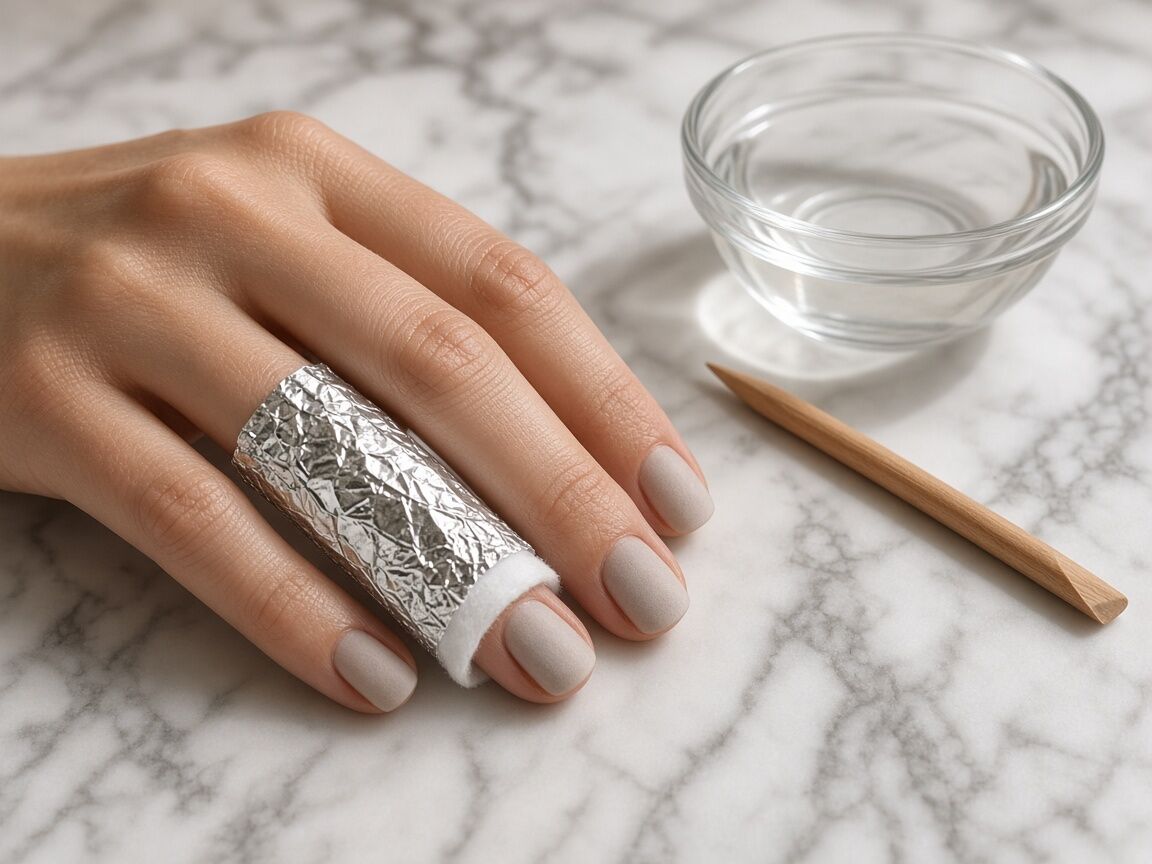
Picture made with AI for this piece.
What you need before you start
Gather everything before acetone touches skin, because interrupting the process mid-soak causes problems. The essentials are nail clippers, a coarse nail file (around 100 grit), pure full-strength acetone, cotton balls or pads, aluminium foil cut into small squares, a wooden cuticle pusher, petroleum jelly, and a soft buffer for aftercare.
One detail matters more than most people expect: the acetone must be pure and undiluted. Healthline and Insider Beauty both note that diluted polish remover or acetone-free formulas cannot dissolve professional acrylic polymer bonds. Some conditioning remover kits—Nails Trending highlighted SAVILAND as one example in late 2026—blend conditioning agents with acetone to reduce dryness during repeated use, and those are a reasonable alternative to straight acetone for people who remove sets regularly.
Work in a well-ventilated room, away from candles, stove flames, or any open heat source. Woman and Home Magazine flags acetone as flammable and notes that fumes in an enclosed space are a genuine hazard, not a minor inconvenience.
The removal steps, in order
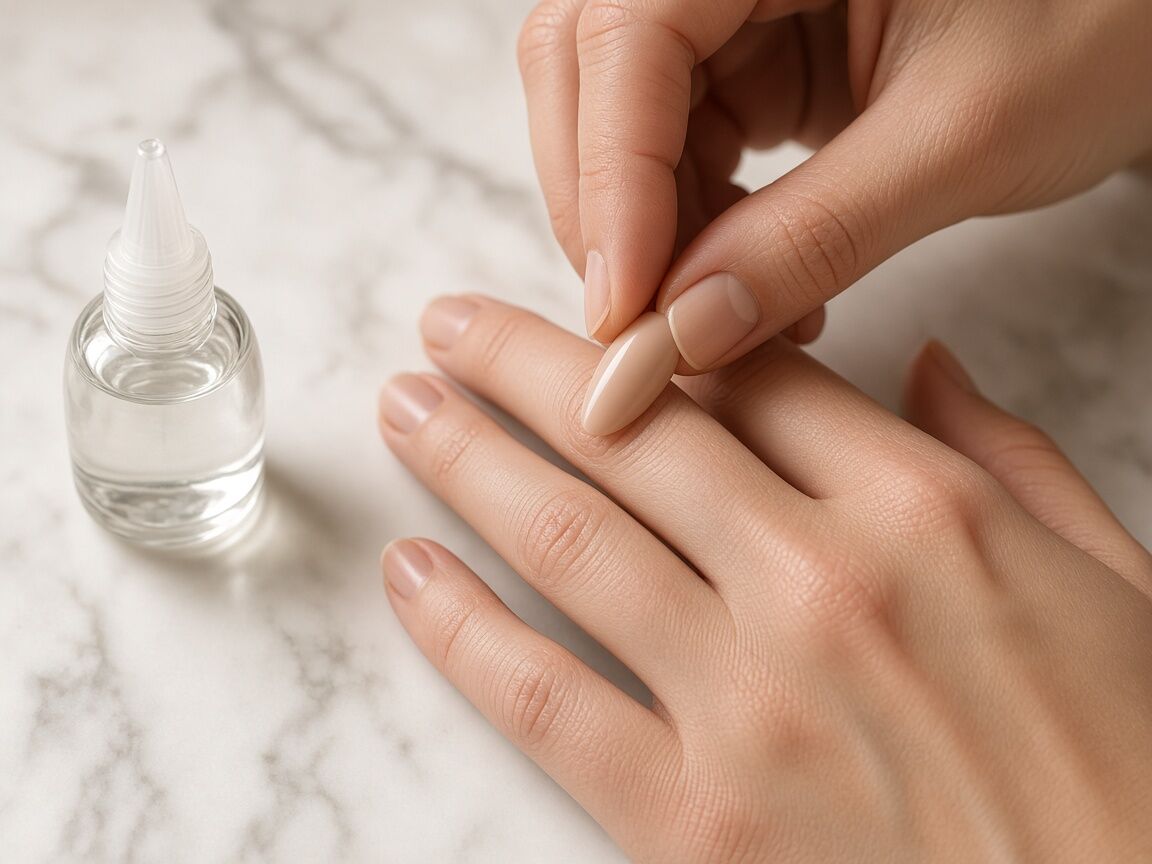
Start by clipping the acrylic down as close to the natural nail as possible without cutting into it. Shorter length means less material for acetone to penetrate, which shortens the soak. Next, use the coarse file across the entire surface to break through the shiny topcoat layer. Healthline identifies skipping this step as one of the most common reasons a soak fails—sealed acrylic resists acetone far longer than a filed surface does.
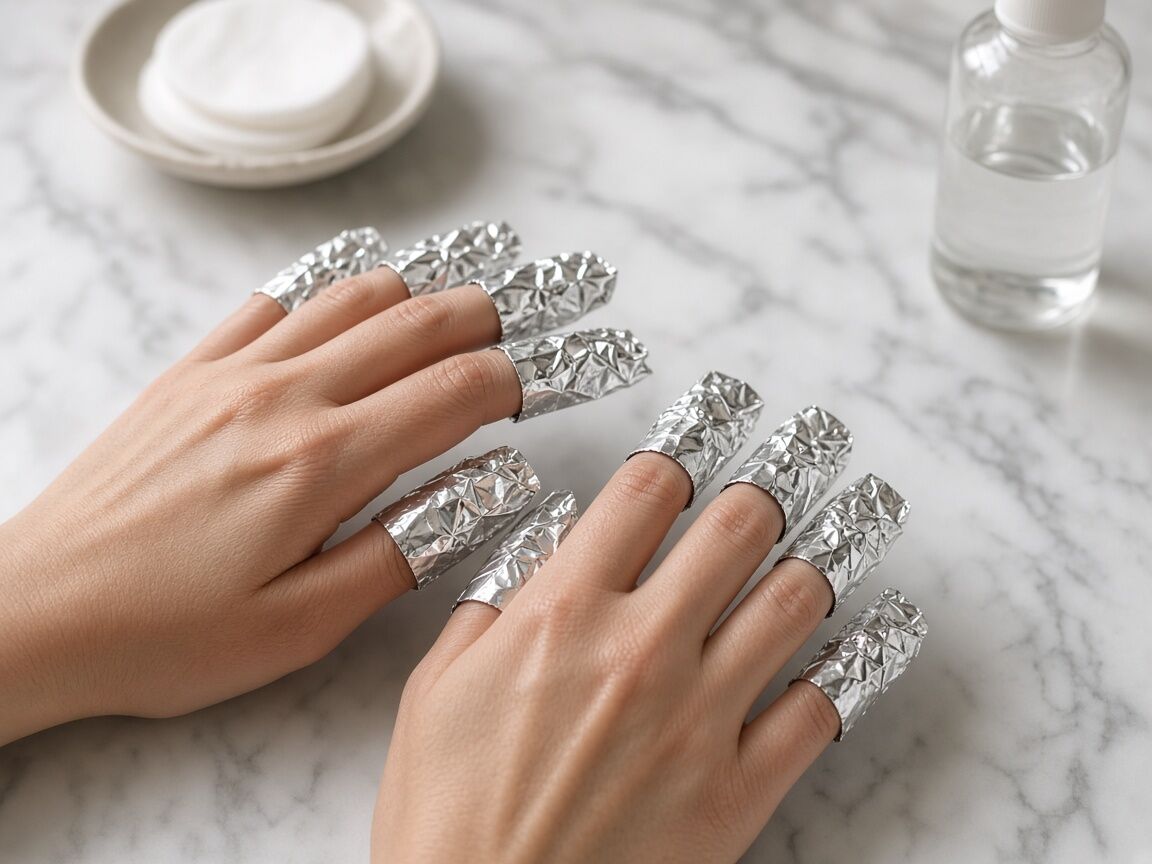
Apply petroleum jelly generously to the skin around each nail, keeping it off the nail plate itself. This barrier protects the surrounding skin from prolonged acetone exposure. Soak a cotton ball in pure acetone, press it flat against the nail, and wrap the finger snugly in a foil square to hold it in place. Good Housekeeping notes that foil wrapping concentrates the acetone and slows evaporation compared with an open bowl soak, though a bowl is also valid if preferred.
Leave the wraps on for twenty to thirty minutes as a starting point—Marvelous Nails notes acrylic bonds more aggressively than many gel systems and often needs that full range or longer. After unwrapping, test one nail: the acrylic should feel gummy or flaky. If it resists, rewrap and continue soaking. Insider Beauty and updated 2026 guidance from the same source put the realistic total window at forty-five to sixty minutes for a full set. Once softened, use only the wooden cuticle pusher to slide the acrylic away with gentle, short strokes. Never apply force.
Mistakes that damage nails—and how to avoid them
The most damaging mistake is also the most tempting: prying, peeling, or pulling acrylic that has not fully softened. SELF is direct on this point—forcing acrylic off strips layers of the natural nail plate, causing thinning and splitting that can take months to grow out. Dental floss, metal tools, and biting at the edges all fall into the same harmful category.
Nails By Beckie identifies four other errors that consistently derail at-home removal: cutting the soak short before the acrylic has gone gummy, skipping the topcoat filing step so acetone cannot penetrate, reaching for diluted remover instead of pure undiluted acetone, and pressing the file too hard during the prep stage so it bites into the natural nail beneath. The fix for all four is the same—slow down and respect each step's purpose.
Woman and Home Magazine adds a safety checkpoint: stop immediately if you feel pain, notice the file or pusher has reached natural nail, or see any sign of infection. Pain during removal is a signal, not something to push through.
How to care for nails right after removal
Acetone draws moisture out of both the nail plate and the surrounding skin, so aftercare is not optional. Overland Park Nails recommends washing hands first, then lightly buffing away any remaining residue—not filing aggressively—before applying cuticle oil directly to each nail and following immediately with a rich hand cream.
The nail plate itself needs time. Times Life notes that full nail regrowth after acrylic removal can take three to six months, though visible improvement often appears within four to six weeks. Updated 2026 guidance from Insider Beauty emphasises that immediate post-care—cuticle oil and moisturiser applied the moment removal is complete—is the most effective way to prevent the brittleness that acetone exposure causes.
DTK Nail Supply recommends taking a break of at least one to two weeks between sets to allow natural nails to recover their strength and moisture balance before a new application goes on.
Why soak time varies from person to person
Not every set of acrylics comes off at the same pace, and understanding why prevents frustration. Bradenton Nails points out that thicker acrylic or a fresher set—one applied only days ago—requires a longer soak or professional tools because the polymer matrix is denser or more fully cured. A mature, thinner set may soften closer to the twenty-minute mark.
A 2026 comparison of removal times puts acrylic soaks at twenty to thirty minutes versus ten to twenty minutes for standard gel or Gel-X, precisely because of product density. If a set was applied over a long nail form or built up in multiple layers, plan for the longer end of the range and avoid the temptation to rush.
Acetone works by breaking down the polymer bonds that hold the acrylic together, according to Polish Perfect—once those bonds are disrupted, the material becomes gummy and releases without force. That chemistry cannot be hurried by pressing harder or adding more acetone mid-soak; it simply needs time.
When a salon is the safer choice
Some situations make professional removal the clearly better option. Overland Park Nails lists lifting with discoloration, pain, swelling, or visible damage to the natural nail as red flags that warrant a technician's assessment rather than a home attempt. These signs can indicate infection or nail plate injury that needs professional attention.
DTK Nail Supply explains that salon removal often uses an e-file to thin the acrylic before soaking, giving the technician more precision and control than filing by hand allows. That combination—e-file thinning followed by a shorter targeted soak—is what Insider Beauty and DTK Nail Supply both describe as current professional practice as of 2026. The result is a faster session with less acetone exposure overall.
Healthline is straightforward about the risk balance: DIY removal done incorrectly can cause nail thinning, dryness, splitting, or infection, while professional removal minimises those outcomes through controlled technique. For anyone whose natural nails are already thin or damaged, or who has never removed acrylics before, booking a salon appointment is a reasonable first move. Updated curriculum requirements introduced in late 2025 now mandate that nail technician students complete a set number of supervised sculptured nail removals—a sign of how much skill the process actually demands.
Questions people ask
Can I remove acrylic nails without acetone?
Insider Beauty notes that acetone-free removers and warm water with oil do not dissolve professional acrylic polymer bonds effectively. Without acetone, the only real option is allowing a thin remaining layer to grow out naturally.
How long does it take to remove acrylic nails at home?
Insider Beauty and 2026 updated guidance put the realistic at-home window at forty-five to sixty minutes for a full set, compared with shorter professional sessions that use an e-file to thin the acrylic before soaking.
Is it safe to peel off acrylic nails?
SELF is clear that prying, peeling, pulling, or biting acrylic strips layers of the natural nail plate, causing thinning and splitting. Only a wooden cuticle pusher on fully softened acrylic is safe.
How do I protect my skin when removing acrylics with acetone?
Apply petroleum jelly generously to the skin around each nail before soaking, keeping it off the nail plate. Woman and Home Magazine also recommends good ventilation and keeping acetone away from any heat source throughout the process.
How long do natural nails take to recover after acrylic removal?
Times Life notes full nail regrowth can take three to six months, with visible improvement often appearing within four to six weeks. DTK Nail Supply recommends at least a one-to-two-week break before applying a new set.
The Papalocal app finds nail salons near you—search it on the App Store or Google Play.
Read: How to Remove Gel Nail Polish Without Damaging Your Nails
Read: Shellac Manicure vs Acrylic Nails