Press-On Nails With Glue: Apply, Wear, and Remove Safely
Press-on nails with glue bond an artificial nail to your natural nail plate using cyanoacrylate adhesive — the same chemistry found in surgical skin adhesives. Prep the nail surface, apply a thin even layer of glue, press and hold, and avoid water for a few hours. Done right, they last longer than adhesive-tab versions and come off without damaging your nails.
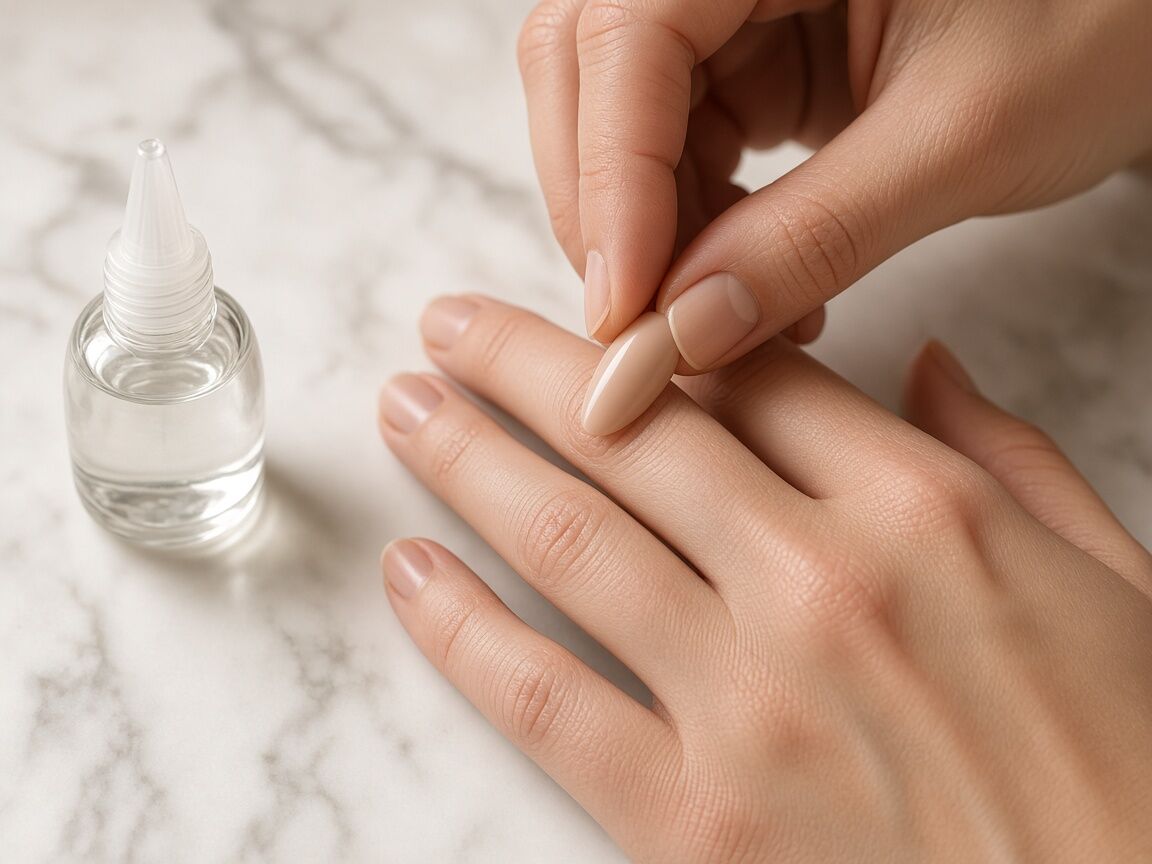
Picture made with AI for this piece.
What is the glue in press-on nails actually made of?
The adhesive in press-on nail glue is cyanoacrylate — specifically ethyl cyanoacrylate in the formulas most commonly recommended today. SHANGMENG nails notes this is the same chemistry used in surgical skin adhesives, which explains both its strong bond and the reason a little goes a long way.
NBC News and nail experts in 2025–2026 consistently point to formaldehyde-free, ethyl-cyanoacrylate glues as the standard to look for. Formulas that still contain formaldehyde carry a higher risk of contact dermatitis and ongoing nail damage, so checking the ingredient list matters.
The glue itself is not the only option. Adhesive tabs — thin double-sided stickers — skip cyanoacrylate entirely. They bond less aggressively, which makes them easier to remove but means they don't last as long. Knowing which adhesive type you're working with shapes every decision from application to removal.
How to prep your nails so the glue actually holds
Nail prep is where most applications succeed or fail. Natural oils on the nail plate prevent cyanoacrylate from forming a clean bond, so removing them is the essential first step. Mindbodygreen recommends cleaning the nail surface thoroughly before any adhesive touches it.
Push back and dry the cuticles so they sit clear of the nail plate. Any moisture, lotion residue, or oil left behind shortens wear time — which already varies with water exposure and how accurately the press-on size matches your nail, according to LuxeFormula Labs.
GELLY Press On Nails flags three prep mistakes that come up repeatedly: skipping the oil-removal step, applying alcohol to the glue side of the press-on rather than the natural nail, and placing the nail upside down. All three cut wear time and increase the chance of lifting.
How to apply press-on nails with glue step by step
Size each press-on before you open the glue. Lay them out in order so you're not hunting for the right nail mid-application with adhesive already on your finger.
Apply a thin, even layer of glue to the natural nail — not a thick bead. Mindbodygreen emphasizes thin and even because excess glue has nowhere to go except toward the cuticle, where Women's Health Mag warns it can cause skin irritation or trigger an allergic reaction. Press the artificial nail down from the cuticle edge forward, hold firm for around ten seconds, and move on.
Once all ten nails are done, GELLY Press On Nails advises keeping them out of water for at least the first few hours to let the adhesive fully set. That means holding off on dishes, a shower, or a swim while the bond cures.
One technique gaining traction among nail artists is applying a gel base coat to the natural nail before the glue. PressedOn Nail Artistry says this protects the nail plate during wear and makes removal gentler — worth building into the routine for anyone doing frequent sets.
Glue vs. adhesive tabs: which should you choose?
The honest answer depends on how long you want to wear them and how much removal effort you're willing to put in. Mindbodygreen puts it plainly: glue-on press-ons typically last longer, but they require more careful removal. Adhesive tab versions are gentler and easier to take off, making them the better fit for short-term or occasional wear, according to SELF.
Tabs and water-soluble glues can often be removed without acetone at all, mindbodygreen notes — a meaningful advantage for anyone with sensitive skin or nails already on the thinner side.
For events, travel, or a single weekend, tabs are a sensible choice. For wear that needs to hold through a full week of regular activity, cyanoacrylate glue is the more reliable option — provided the prep and removal steps are followed carefully.
How to remove press-on nails without damaging your nails
Removal is where the most nail damage happens, and almost all of it is avoidable. Ripping or forcing a press-on off can strip layers of the natural nail plate, leaving ridges, thinning, or keratin granulations, Women's Health Mag warns. The fix is patience, not force.
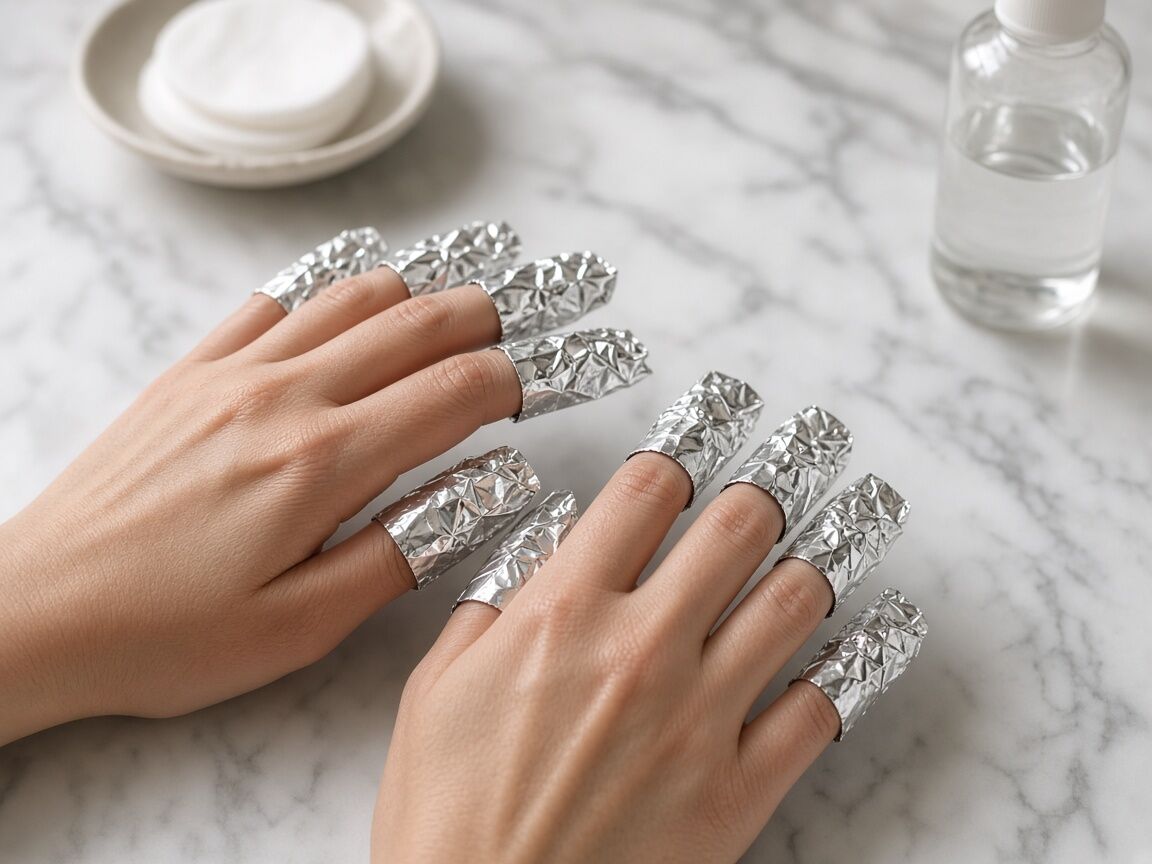
Healthline describes two reliable methods. The first is soaking in warm soapy water with oil for somewhere between ten and twenty minutes, then gently working a wooden stick under the edge. The second is acetone-soaked wraps left on for ten to fifteen minutes, followed by the same gentle lifting. Healthline and nail professionals agree: never use a metal tool — it scratches and gouges the nail plate. Wooden or plastic sticks only.
Acetone is effective but drying, so PressedOn Nail Artistry says moisturizing the nails and cuticles immediately after is essential, not optional.
Are press-on nails with glue safe for your natural nails?
Used correctly, press-ons compare favorably with gel and acrylic services. LuxeFormula Labs notes they cause less damage than those options because they require minimal to no filing of the natural nail.
The risks that do exist are mostly tied to skipping steps. Excess glue near the cuticle, forced removal, and wearing sets back-to-back without any break are the main culprits. NBC News recommends giving natural nails a rest day or two between sets to prevent brittleness and peeling, and notes that constant consecutive wear without breaks can lead to cuticle infections over time.
For the glue itself, NBC News and other experts in 2026 point to formaldehyde-free formulas as the standard recommendation for reducing allergy and irritation risk.
What's new with press-on nails in 2026?
The category has moved well past basic drugstore sets. Simporter.com, reporting in late 2026, identifies shorter practical lengths and sheer natural finishes as dominant wear trends, alongside adhesive innovations aimed at improving hold without increasing removal difficulty. Hybrid application technology and what the same source calls digital or smart press-ons are flagged as key product developments on the near horizon.
On the design side, Popink noted in mid-2026 that tinted chrome finishes, hand-painted botanicals, and hyper-realistic soft gel textures are the looks getting the most attention. Reusable sets — designed to be cleaned, stored, and worn again — have also become a more serious product category, with brands like Glamnetic and Olive & June cited by Forbes Vetted in 2025 for salon-quality results across varied shapes.
Questions people ask
How long do press-on nails with glue last?
Wear time varies with adhesive type, how accurately the nail is sized, and how much water or physical work the hands encounter, according to LuxeFormula Labs. Glue-on sets generally outlast adhesive-tab versions, though no single timeframe applies to every formula or wearer.
Can press-on nails damage your natural nails?
Forced removal is the main cause of damage — it can strip nail plate layers and cause ridges or thinning, per Women's Health Mag. Applied and removed correctly, press-ons require minimal to no filing and cause less damage than gel or acrylic services, LuxeFormula Labs notes.
What glue is safe to use for press-on nails?
NBC News recommends formaldehyde-free glues made with ethyl cyanoacrylate to reduce the risk of contact dermatitis and nail damage. Keeping glue away from the cuticle area also lowers the chance of skin irritation, according to Women's Health Mag.
How do you remove press-on nails without acetone?
Soaking in warm soapy water with oil for ten to twenty minutes, then gently lifting with a wooden stick, is the acetone-free method Healthline describes. Adhesive-tab press-ons and those using water-soluble glues often release without acetone at all, mindbodygreen notes.
Why do my press-on nails keep lifting or falling off?
The most common causes are residual oil or moisture on the nail plate, glue applied too thickly, and exposure to water before the adhesive has fully set. GELLY Press On Nails advises avoiding water for at least a few hours after applying.
How often should you take a break from press-on nails?
NBC News recommends a rest day or two between sets to prevent brittleness and peeling. Continuous back-to-back wear without any break can lead to cuticle infections or nail brittleness over time, the same source notes.
Use the Papalocal app to find nail salons near you — available on the App Store and Google Play.
Read: How to Remove Gel Nail Polish Without Damaging Your Nails
More in Tips & Tricks Articles