Gelish Nail Polish: Formula, Application, and Who It Suits
Gelish is the original brush-in-bottle soak-off gel polish, invented in 2009 by Danny Haile of Nail Alliance. It applies like regular polish yet cures under LED or UV light for a durable, high-shine finish that Ellisons describes as up to twenty-one days of chip-free wear on natural nails.
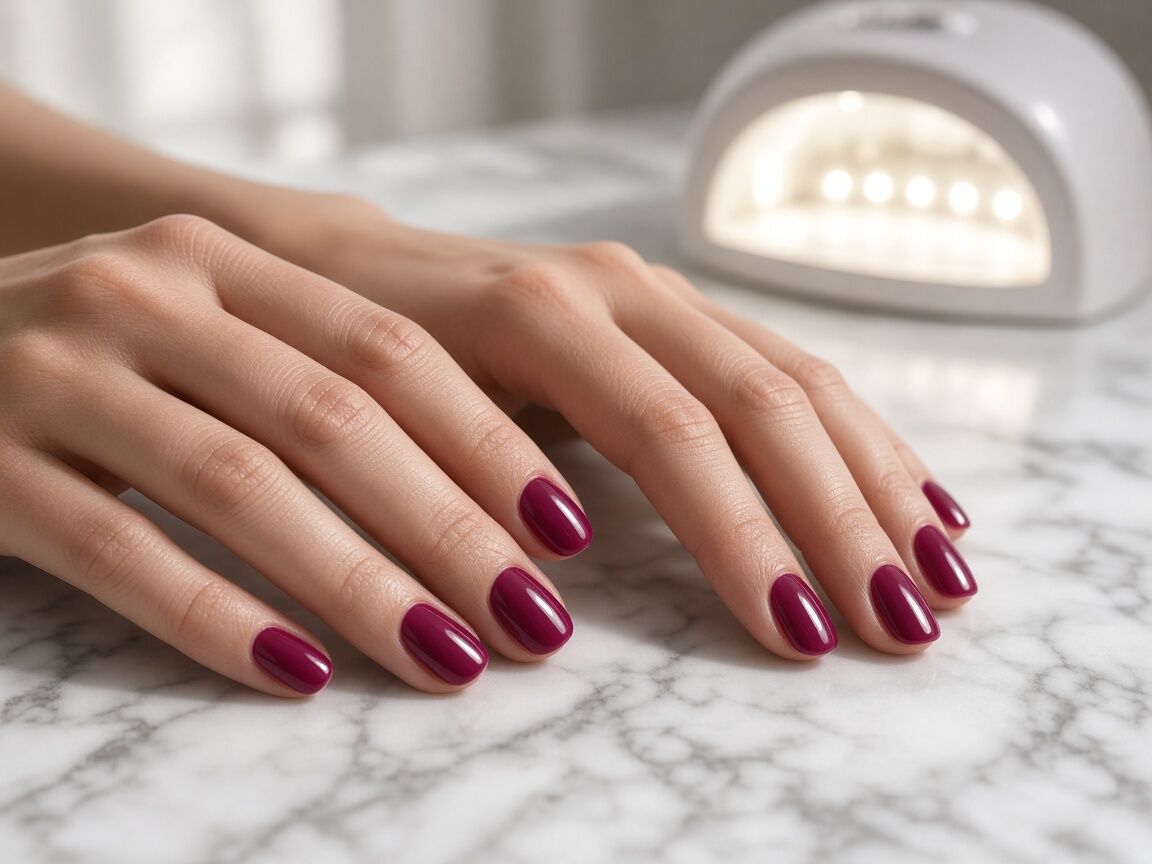
Picture made with AI for this piece.
What is Gelish gel polish and how did it start?
Gelish arrived in 2009 as the first gel polish packaged in a brush-in-bottle format, created by Danny Haile of Nail Alliance. Before that, gel colour systems required separate pot-and-brush setups that felt unfamiliar to anyone trained on traditional lacquer. The brush-in-bottle design changed that, making the product approachable for salon professionals and, over time, available in over eighty countries.
Unlike an ordinary nail polish that air-dries through solvent evaporation, Gelish relies on photoinitiators in its formula to harden when exposed to UV or LED light. That curing step is what separates it from lacquer in both durability and removal method. Gelish also omits formaldehyde, toluene, and DBP from many versions of its formula, though it does contain methacrylates and photoinitiators, as Nailicy notes.
How does Gelish application work step by step?
A standard Gelish service follows a defined sequence. Nail prep begins with pH Bond to balance the nail plate's surface, followed by Foundation base coat, two thin colour coats, and Top It Off top coat, with every layer cured before the next is applied. Gelish-Australia describes this as the core protocol that underpins the system's wear.
Curing times matter: Gelish-Australia states that colour coats cure in thirty seconds under an 18G LED lamp or two minutes under UV light. Thin coats are essential — thick layers trap uncured product and shorten wear. Capping the free edge of each coat, meaning dragging the brush across the nail tip, is another non-negotiable step that GelishNZ identifies as key to preventing lifting and chipping.
After the top coat cures, Gelish recommends wiping the inhibition layer away with a lint-free wipe and cleanser to reveal the finished shine. Skipping any of these steps — prep, thin coats, edge-capping, or full cure — is among the most common causes of early chipping, according to GelishNZ.
What does Gelish Color Plus bring that the original line doesn't?
In October 2026, Gelish launched Color Plus, described by ScratchMagazine.co.uk as a next-generation gel polish built on enhanced copolymer technology. The formula is free from both HEMA and TPO, addressing two sensitiser concerns that have grown in professional conversation over recent years. ScratchMagazine.co.uk reports thicker viscosity, richer pigmentation, and smoother application across forty-five new shades.
Color Plus also introduces a No Cleanse Top Coat that Gelish claims delivers the highest shine in its entire portfolio, removing the inhibition-layer wipe step that the original system requires. For technicians who see clients with known sensitivities, the Color Plus line offers a formulated alternative within the same brand family rather than a switch to a different system entirely.
How does Gelish compare with similar gel polish systems?
Gelish sits in the professional soak-off gel polish category alongside systems such as DND Gel Polish, each with its own base-colour-top protocol and LED-cure workflow. Where Gelish differentiates itself is in its 2009 originator status and the breadth of its professional education programme — Gelish.com notes that technician training is a deliberate part of the brand's offer.
Gelish PolyGEL is a separate product in the brand's range, combining gel and acrylic properties for length and structural strength rather than colour alone, as NailNiche explains. It is not a polish and should not be confused with the colour system when comparing options for clients who want only a colour service versus those needing extension or reinforcement.
Regular nail polish requires neither a lamp nor acetone removal, making it lower-commitment. Gel polish, including Gelish, trades that convenience for the durability and shine that air-dry lacquers cannot match. TheStudioSupply frames this clearly: the light-cure step creates the bond; acetone soak-off is the only safe way to reverse it.
What are the safety and allergy considerations for Gelish?
Two areas warrant honest attention. First, UV and LED exposure during curing carries a skin-ageing and irritation risk; Glazeme.com.au suggests applying sunscreen or wearing UV-protective gloves before placing hands under the lamp. Second, allergic reactions to Gelish — or any gel polish containing acrylates — can develop from uncured product making contact with skin. Nailicy advises patch testing and keeping gel strictly off the surrounding skin during application.
These are not reasons to avoid the product, but they are reasons to apply it correctly and to take a client's sensitivity history before a service. The Color Plus formula's freedom from HEMA and TPO addresses two of the most discussed sensitisers, though it still contains other acrylate chemistry. Where sources disagree is on how significant the lamp-exposure risk is in a typical salon session; Glazeme.com.au raises it, while many professional guides focus primarily on skin-contact allergy as the more immediate concern.
How should Gelish be removed safely?
Gelish is a soak-off system, and Glazeme.com.au is direct: peeling or scraping gel from the nail causes mechanical damage to the nail plate and should never be done. The correct method is to lightly file the shine from the top coat surface, then soak the nails in acetone — either in a bowl or with foil-wrapped acetone-soaked pads — until the gel softens and lifts cleanly.
Rushing this step by scraping away product that has not fully released is where most nail damage in gel removal occurs. Patience with the soak time protects the nail underneath. For clients who want to explore safe removal technique in more detail, the Polishpedia guide on Shellac removal covers the soak-off process with similar gel systems.
Who is Gelish gel polish suited for?
Gelish works well for clients who want a salon-quality, high-shine colour service that holds through daily activity without the fragility of regular polish. Ellisons' stated wear of up to twenty-one days on natural nails — when prep and application are correct — makes it practical for people who prefer fewer appointments.
For nail technicians, the system's structured protocol, extensive colour range across hundreds of shades in professional fifteen-millilitre bottles, and the brand's education focus make it a reliable professional-grade choice. The November 2025 introduction of a HEMA-free Brush-On Builder gel, noted by GelishNZ, also gives technicians a companion strengthening product for clients with weak or damaged nails who want more than colour alone.
Clients with known acrylate sensitivities should discuss the Color Plus option — formulated without HEMA or TPO — with their technician, and anyone new to gel polish should understand the lamp-cure and acetone-removal requirements before booking.
Questions people ask
How long does Gelish nail polish last?
Ellisons states that Gelish provides up to twenty-one days of chip-free, high-shine wear on natural nails when the full application protocol — prep, thin coats, edge-capping, and correct curing — is followed.
Does Gelish need a UV lamp or LED lamp to cure?
Gelish cures under both UV and LED lamps. Gelish-Australia gives cure times of thirty seconds under an 18G LED lamp or two minutes under a UV lamp for colour coats.
What is Gelish Color Plus and how does it differ from the original?
Launched in October 2026, Gelish Color Plus is formulated without HEMA or TPO, with enhanced copolymer technology, thicker viscosity, and richer pigmentation across forty-five shades, plus a No Cleanse Top Coat, according to ScratchMagazine.co.uk.
Can Gelish cause an allergic reaction?
Nailicy notes that allergic reactions can develop from uncured Gelish product contacting skin or from acrylates in the formula. Keeping gel off surrounding skin and patch testing are advised precautions.
How is Gelish removed without damaging nails?
Glazeme.com.au advises filing the top coat surface, then soaking in acetone until the gel lifts cleanly. Peeling or scraping should never be done, as it damages the nail plate.
What is the difference between Gelish gel polish and Gelish PolyGEL?
Gelish gel polish is a colour-only soak-off system. Gelish PolyGEL is a separate hybrid product combining gel and acrylic properties for nail length and structural strength, as NailNiche explains.
The Papalocal app finds nail salons near you — search it on the App Store or Google Play.
Read: DND Gel Polish: Formula, Lines, Application, and Who It Suits
Read: How To Remove Shellac Nail Polish
Try it, then get it doneTry a look on in your skin tone, or find a salon near you.
More in Product Articles